
I´ve forgotten the name of the author who introduced to me the concept ”People are friends in spots,” but the idea has stuck in my head, after the first time I came across it. Many of us understand we have different types of friends, although we rarely say or write these groupings categorically, except for our ”best friends.” We know who are the ”good” friends, the ”true” friends, the ”buddies,” the ”activity” friends, the ”soul mates,” and so forth, in our midst. Being aware of the categories of friendships we build help us identify who we can best talk with or be with in different times and situations, or what types of expectations we can reasonably make and vice versa.
There are other times though when we don´t think of categories, and we make time out of our usually busy lives, even going as far as reallocating our usually tied up ”other material resources” to be the friends others need. In these situations, we become ”friends in time and rhyme” with other people, making time to help them and celebrate life with them, literally and figuratively. There are often many reasons why we do that: we may feel we want to give something back to them or we believe it is their time to shine, or that we think our presence, efforts, energy, and gifts can add to their well-being and happiness, as well as to those who´d attend those events.
This, I think, is a good way to explain the synergy and energy behind the parties organized by ”overseas Filipinos” like me and my Norway-based friends here. These events usually celebrate big occasions like Christmas, news year´s eve, weddings, baptisms, confirmation into the Christian church or into the society, the ”big” birthday numbers like 1, 10, 20, 30, 40, 50, 60, 70, 80, etc. Every Filipino I know who´s now based here in Norway is usually busy with either work or family life, but when some friends or relatives say they will celebrate a big event, like their xth and other big birthdays (or that of their spouse/partner/children), many friends/relatives will literally move time and space to be there.
What Parties Are Made of: The Filipino-Norwegian Experience
The usual big Filipino parties I´ve attended here are self-organized and run without the help of external caterers or party organizers. Friends (and relatives) usually volunteer to bring something – a dish or a cake or both, since they´ve usually been the recipients of such kind gesture from the same social circles.
Many event decorations are also home-made and the party venues are usually decked the night, day, and in rare and extreme cases, hours before the actual event by the same group of friends/relatives who would attend the event. Clean-up after the event is also jointly done by the same group. The unspoken rule is: people who help in other people´s parties will usually get the same help when it´s their turn to celebrate. This is called the ”bayanihan” spirit, a Filipino concept which is based on the golden rule: one gives and so one also receives. Inability to reciprocate after a long time will create what the Filipinos call “utang na loob” (debt of gratitude). One´s inability to repay such “debts of gratitude” will eventually lead to imbalances in one´s friendship circles, such that one couldn´t expect others to be easily available and as generous to offer help when the time comes that one will also want to stage her own celebrations. This jibes perfectly with the principle of equality that is highly valued in Norway.
The food buffet table in these Filipino-Norwegian parties usually has pancit (fried noodles), at least one or two chicken recipes, some pork recipes, fish (with salmon as the most common), shrimps, different kinds of salads, potatoes, and rice. At times, lamb and turkey may also be served. Spring rolls are also a staple in bigger parties, and hot dogs and bread may be served as well, especially when many kids and the younger generation are expected to attend. For dessert, the cakes served are mostly home-baked, catering to both Norwegian and Filipino palates. Some manage to bring famous Filipino delicacies like ”puto” (small steamed buns made from rice flour), ”biko” (glutinous rice cooked in coconut and usually red sugar), ”bibingka” (baked delicacy made of glutinous rice flour, coconut milk, and common milk), ”buko-pandan” dessert (coconut meat and jelly made from pandan leaves extract or powder, served with with milk and sugar), and many others.
There is usually a prayer before food is served or the buffet table is opened. For entertainment, someone usually plays the piano, guitar or the flute, or some people or groups may sing songs to entertain both the celebrant and the guests. There may even be dances by the younger generation. Some people are also asked to say something about the celebrant. In recent years, it has also become common for a video presentation to be shown, where both still pictures and videos about the celebrant or messages for the celebrant are put together by one of the party attendees and shown on a projector screen like a mini movie.
Recent Experiences
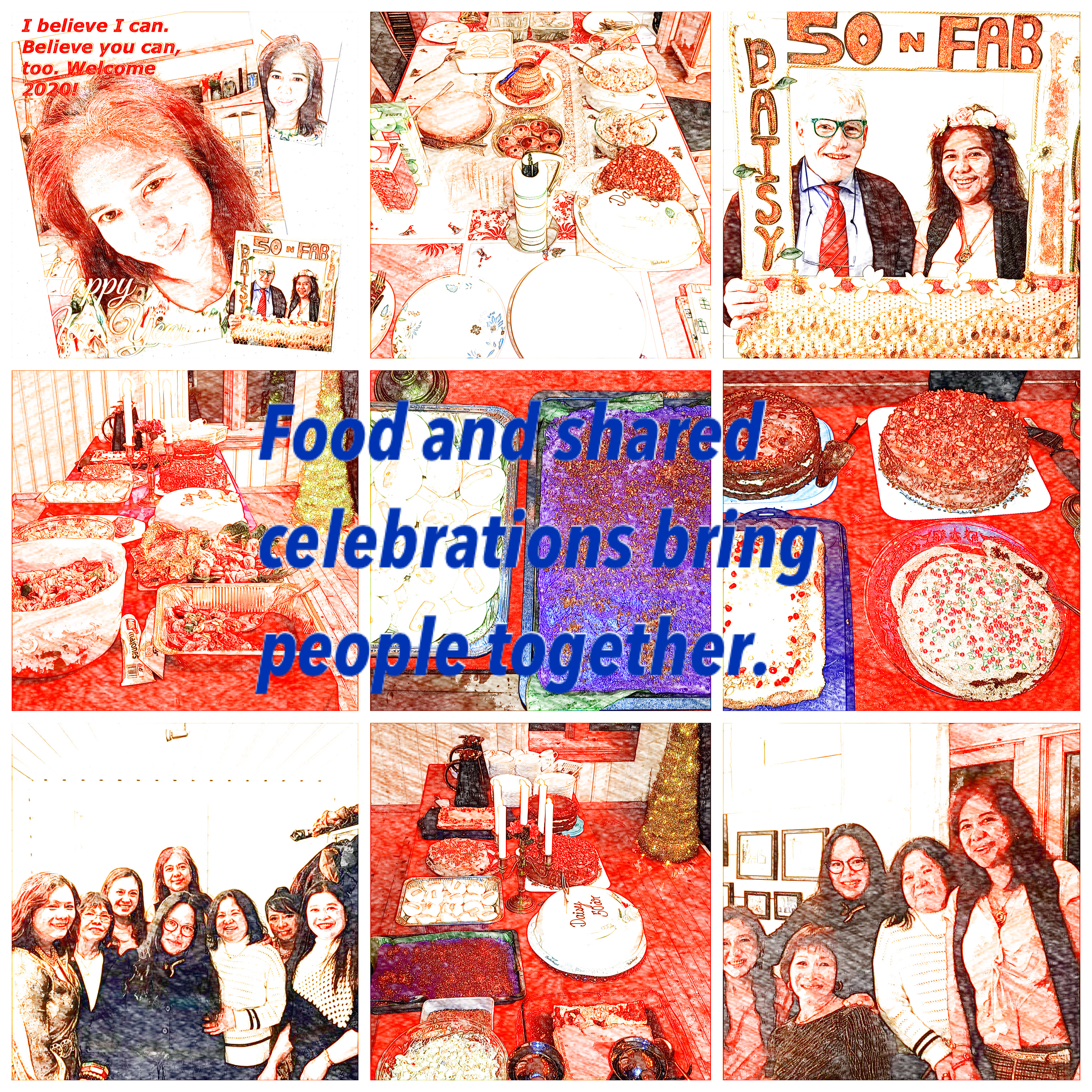
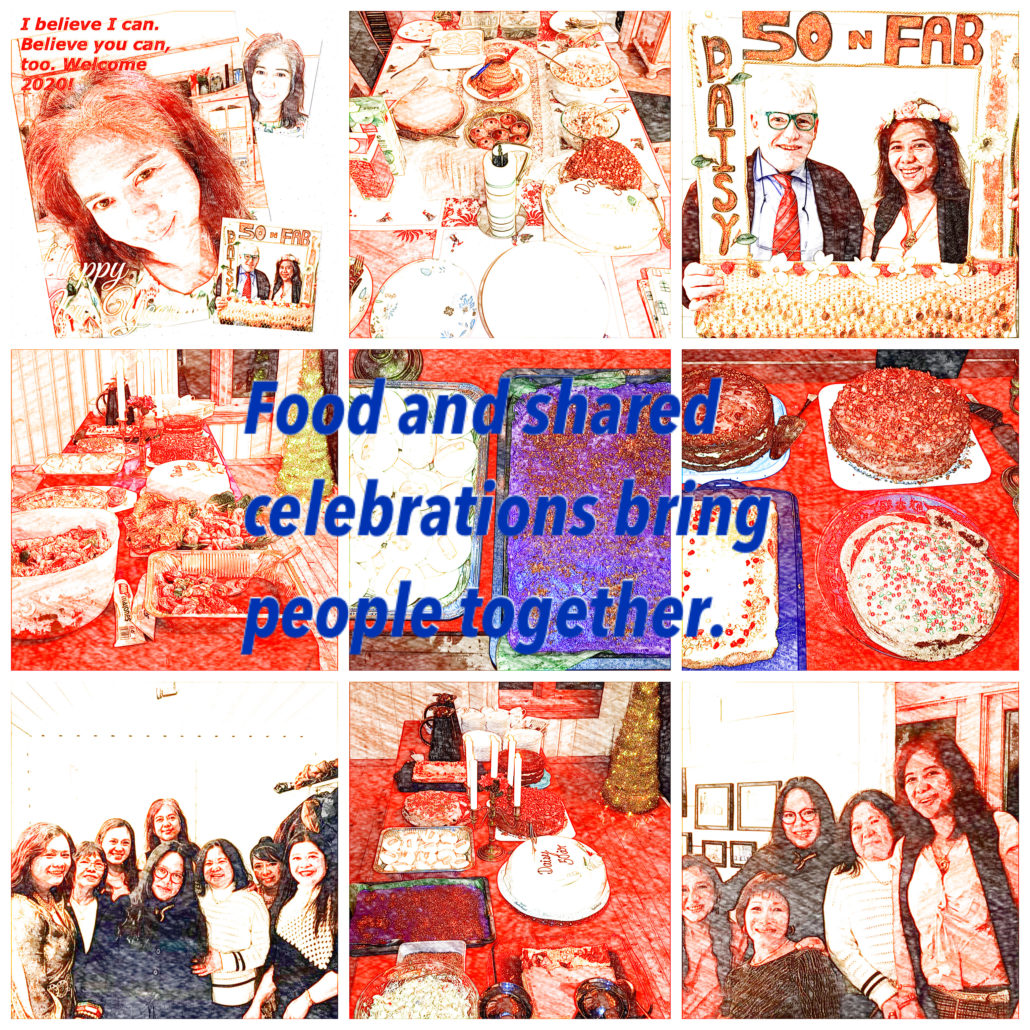
The most recent ”big” birthday party hubby and I attended was the 50th birthday celebration of our family friend, Daisy. This party had most of the features mentioned above, plus more singing sessions since a karaoke system was made available for the guests. Many Filipinos love to sing and would sing, if asked. Today´s karaoke systems also have many danceable tunes. Since there were a number of good singers and dancers at the event, it was possible to dance to the karaoke tunes sung by some guests.
Filipino-Norwegian parties even here in Norway always have the usual photo sessions. Filipinos seem to love taking pictures of the event itself and of their own faces and those of their friends who aren´t too camera-shy. Both serious and wacky photo poses are taken, for fun and posterity.
What´s a big party without drinks and banter? Filipino parties, especially the evening parties have both, but usually in good moderation. Everyone is encouraged to talk to one another, moving from table to table to get to mingle with other guests, as much as possible.
The ”friends in time and rhyme” concept I´ve mentioned above becomes alive in these Filipino parties here. I felt it during Daisy´s party as well as during our usual new year´s party for our group of friends who live in the same municipality.
My hubby suggested we host this new year´s party again at home, and the others agreed. Surprisingly, there was much noodles and sweets in this new year´s party. This might be auspicious, since many Filipinos associate noodles with long life — and perhaps long fortunes, and sweets on the new year´s table are thought to usher in sweet or smooth relations in the family, friendship, and job/business circles.
As in the recent 50th birthday celebration of Daisy, there was also much food left after the new year´s party at home since the guests or those who originally wanted to attend each brought in or sent something. Thus, guests to Filipino parties are usually offered to wrap something they like and bring such home, such that the hosts wouldn´t have to store so much extra food or even might need to throw away some of it in the end.
Despite the usual busy tempo in these parties, many guests, especially the ladies, find time to chit-chat about life in general. The most memorable and refreshing topics that came out in this new year´s party chit-chat is how we have all been changing and growing over the years and how we can further improve self-satisfaction by taking some pride and joy in the things we are able to accomplish in a day, instead of getting stressed about the ones we aren´t able to work on. We also thought it might do us more good if tried focusing more on the moment and tasks at the moment, instead of letting our thoughts fly to the future or future plans and requirements that can reduce our concentration on present tasks.
We don´t openly say that these occasional parties we organize for people in our social circles are reunions of sorts or that physical presence of familiar people in these events can be emotionally enriching. In these events, people who are familiar with each other who meet and emotionally connect with each other through simple but equally enriching chats become friends in time and rhyme, while new people with similar energies who are able to do the same become ”event comrades.” In the end, most people who attend these physical gatherings become richer emotionally, leaving behind invisible new footprints in other people´s memories and vice versa.
With these thoughts, I wish my relatives and friends here and around the world a happy new year. Let´s welcome 2020 like we welcome friends in time and rhyme.


